
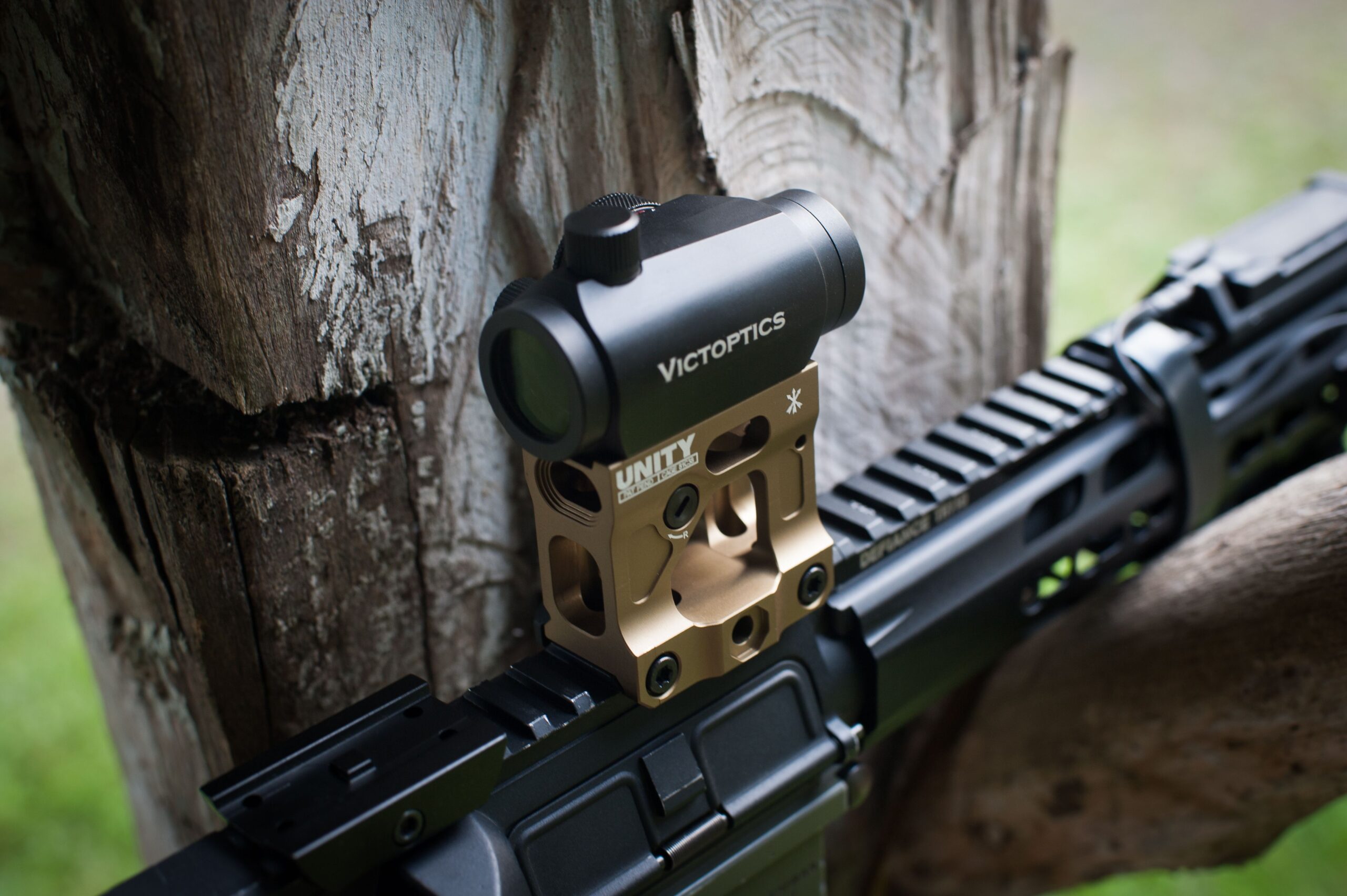
Whether you are a beginner learning the fundamentals of shooting or an experienced marksman looking to improve accuracy, choosing the right optic can significantly enhance your performance. One of the most common questions among firearm enthusiasts is the difference between Red dot sights vs holographic sights. While both optics are designed to help shooters acquire targets more quickly than traditional iron sights, they operate using different technologies and offer unique advantages depending on the intended application.
Modern optics have transformed the shooting experience by providing faster target acquisition, greater situational awareness, and improved precision. Hunters, competitive shooters, law enforcement professionals, and recreational firearm owners all benefit from selecting an optic that matches their specific needs. Understanding the strengths and limitations of each option helps ensure that your investment delivers long-term value.
As a trusted manufacturer specializing in rifle optics, mounts, and OEM solutions, Billings continues to develop products that meet the evolving demands of shooters worldwide. By focusing on quality engineering, durability, and innovation, the company provides reliable optics suitable for a wide variety of shooting environments.
Understanding Reflex and Holographic Technology
Before comparing these optics in detail, it is important to understand how each technology works.
A traditional red dot sight uses a light-emitting diode (LED) to project a red aiming point onto a specially coated lens. The shooter sees the illuminated dot while maintaining both eyes open, allowing quick engagement of moving or stationary targets. The optic creates the appearance that the dot is positioned on the target even though it is projected inside the sight.
A holographic sight uses laser technology to illuminate a holographic reticle embedded within the viewing window. Instead of reflecting an LED onto the front lens, the holographic image is reconstructed inside the optic itself. This advanced design provides unique optical characteristics that many professional users appreciate.
Although both systems accomplish similar goals, understanding Red dot sights vs holographic sights requires looking beyond the visible reticle and examining how each optic performs in real-world situations.
How Red Dot Sights Work
Red dot sights have become one of the most popular firearm optics because they are lightweight, simple to operate, and highly efficient.
The LED inside the optic projects a bright red dot that remains aligned with the firearm regardless of eye position within reasonable limits. This enables shooters to focus entirely on the target rather than aligning front and rear iron sights.
Because the technology is relatively simple, manufacturers can produce compact optics that offer excellent battery life while remaining affordable. Many modern red dot sights operate continuously for tens of thousands of hours using a single battery, making them ideal for everyday use.
The straightforward design also contributes to improved durability and reduced maintenance, making red dot optics suitable for hunting rifles, sporting firearms, shotguns, and modern sporting rifles.
How Holographic Sights Work
Holographic sights rely on more sophisticated optical engineering.
Instead of reflecting an LED image, they reconstruct a holographic reticle using laser illumination. The result is a reticle that often appears sharper under varying lighting conditions and maintains accuracy even if portions of the viewing window become damaged.
One distinguishing characteristic is the complex reticle design available in many holographic optics. Rather than displaying only a simple aiming dot, holographic sights frequently include a larger outer circle surrounding a precise center aiming point. This combination allows extremely fast target acquisition while maintaining excellent precision for longer shots.
When evaluating Red dot sights vs holographic sights, many professional shooters appreciate holographic technology because of its performance under demanding tactical environments.
Target Acquisition Speed
Speed is one of the primary reasons shooters purchase optical sights.
Both optic types allow shooters to keep both eyes open while engaging targets, improving peripheral vision and situational awareness. However, slight differences exist.
Red dot sights excel because of their simplicity. The single illuminated dot naturally draws the shooter’s attention toward the target. Minimal visual distraction makes them especially effective during hunting or recreational shooting.
Holographic sights often feature larger reticles with multiple aiming references. Many shooters find these reticles faster during close-quarters shooting because the larger circle immediately guides the eye toward the center aiming point.
Ultimately, target acquisition speed depends more on training than technology. Experienced shooters become proficient with either optic after sufficient practice.
Accuracy at Different Distances
Accuracy depends on several factors including optic quality, firearm setup, ammunition consistency, and shooter skill.
Red dot sights are exceptionally accurate at close and medium distances. Their simple aiming point enables quick engagement without sacrificing practical accuracy for most sporting applications.
Holographic sights often provide greater precision at varying distances because the reticle maintains a consistent appearance even as the shooter’s eye position changes. Many users also appreciate the smaller center aiming point available on holographic reticles for precise shot placement.
The discussion surrounding Red dot sights vs holographic sights often centers on intended shooting distance. For typical recreational shooting inside 100 yards, either optic performs extremely well. Tactical applications and specialized scenarios may favor holographic systems because of their advanced reticle designs.
Battery Life Comparison
Battery performance is one of the biggest practical differences between these optics.
Red dot sights are industry leaders in battery efficiency. Advances in LED technology allow some models to remain operational continuously for several years without battery replacement. Automatic brightness adjustment and motion-activated power-saving modes further extend battery life.
Holographic sights consume considerably more power because they rely on laser illumination instead of LEDs. Depending on brightness settings and usage patterns, batteries may require replacement far more frequently.
Shooters who prioritize long-term readiness with minimal maintenance often choose red dot sights specifically because of their exceptional battery performance.
Weight and Size
Compact equipment is increasingly important for today’s shooters.
Red dot sights are generally smaller, lighter, and easier to mount on various firearm platforms. Their reduced weight contributes to better firearm balance, especially during extended hunting trips or competitive shooting events.
Holographic sights typically have a larger housing due to their more complex internal components. Although they remain highly durable, the additional size and weight may be noticeable on lightweight carbines or hunting rifles.
For shooters building lightweight firearms, compact red dot optics usually offer a practical advantage.
Durability Under Harsh Conditions
Durability plays an essential role in optic selection.
Quality red dot sights are engineered to withstand recoil, vibration, rain, dust, and temperature changes. Many premium models feature waterproof and shock-resistant construction suitable for demanding outdoor use.
Holographic sights are also built to military-grade specifications in many cases. Their robust construction allows them to continue functioning under challenging environmental conditions.
One interesting advantage of holographic technology is that partial damage to the viewing window may still allow the reticle to remain usable because the hologram is reconstructed across the remaining lens area. This characteristic makes holographic optics attractive for professional tactical users who may operate in unpredictable environments.
Manufacturers like Billings understand that reliability is essential regardless of application. Through continuous research and precision manufacturing, the company develops rifle optics and mounting solutions capable of performing under demanding field conditions while also supporting OEM manufacturing projects for partners around the world.
Eye Relief and Viewing Experience
One reason reflex-style optics have become so popular is their generous eye relief.
Unlike magnified scopes, both red dot and holographic sights allow shooters to maintain a comfortable shooting position without worrying about maintaining a fixed distance from the optic.
Red dot sights generally provide a very clear viewing window with minimal distortion.
Holographic sights offer a slightly different visual experience because of their reconstructed reticle. Some shooters appreciate the crisp appearance, while others may notice slight differences depending on lighting conditions and individual eyesight.
Neither option is universally better, making personal preference an important consideration when choosing between Red dot sights vs holographic sights.
Cost and Overall Value
Price is often one of the first considerations when purchasing a firearm optic. While quality should never be sacrificed for cost alone, understanding the value offered by each type of sight can help shooters make an informed decision.
Red dot sights are available across a wide price range, from entry-level models for recreational shooting to premium optics built for professional applications. Because their internal design is relatively simple, they generally offer excellent performance at a lower price point. This makes them a practical choice for first-time buyers, hunters, and sport shooters who want reliable performance without exceeding their budget.
Holographic sights typically command higher prices because of their advanced optical technology and more complex manufacturing process. The higher investment often reflects additional features, specialized reticles, and enhanced durability. For professional users who rely on their equipment in demanding situations, the extra cost may be well justified.
When comparing Red dot sights vs holographic sights, value should always be measured by how well the optic meets your intended purpose rather than price alone.
Which Optic Is Better for Hunting?
Hunters require optics that are dependable, lightweight, and capable of performing in changing weather conditions. The ideal sight also depends on the type of game being hunted and the terrain.
Red dot sights are excellent for hunting at short to medium distances. Their compact size keeps rifles lightweight, while their exceptional battery life ensures the optic remains ready throughout extended hunting seasons. Fast target acquisition is particularly useful when pursuing fast-moving game such as wild boar or predators.
Holographic sights can also be effective for hunting, especially when rapid target acquisition is important. Their larger reticle design allows shooters to engage moving targets quickly while maintaining good situational awareness. However, their increased weight and shorter battery life may be less appealing for hunters who spend long days in the field.
For most hunting applications involving moderate distances, red dot sights provide an excellent balance of performance, convenience, and affordability.
Tactical and Professional Applications
Military personnel, law enforcement officers, and security professionals often operate in dynamic environments where reliability and speed are critical.
Holographic sights have gained popularity in tactical settings because their reticles remain highly effective under various lighting conditions. Many professional users appreciate the combination of a large outer ring with a precise center aiming point, which supports both rapid engagement at close range and accurate shot placement at greater distances.
Another advantage is the ability of holographic sights to remain functional even if part of the viewing window is damaged. This additional level of resilience can be valuable during high-risk operations.
Red dot sights are also widely used by professionals because they are lightweight, dependable, and extremely efficient. Advances in optic technology have made many premium red dot sights suitable for demanding tactical environments.
Ultimately, selecting between Red dot sights vs holographic sights depends on mission requirements, training, and personal preference.
Competitive Shooting Performance
Competitive shooting demands speed, consistency, and precision. Every fraction of a second matters, making optic selection an important decision.
Many competitors prefer red dot sights because they are lightweight and feature minimal visual clutter. The simple aiming point allows shooters to transition rapidly between multiple targets while maintaining accuracy.
Some competitors favor holographic sights because the larger reticle assists with rapid target acquisition during close-range stages. Shooters participating in practical shooting competitions often appreciate the unique reticle design when engaging targets from unconventional positions.
The best optic is ultimately the one that complements the shooter’s training, firearm setup, and competition style.
Mounting Options and Compatibility
An optic performs only as well as the mounting system securing it to the firearm. A high-quality mount ensures consistent zero, withstands recoil, and maintains stability during repeated use.
Modern rifles support a variety of mounting standards, including Picatinny and Weaver rails. Choosing a mount specifically designed for the selected optic improves reliability and simplifies installation.
As a manufacturer specializing in optics and accessories, Billings offers compatible mounting solutions designed for different rifle platforms. Proper engineering and precise machining help ensure that optics remain securely aligned, even after extended use in challenging environments.
Selecting the correct mount is just as important as selecting the optic itself, as both components work together to deliver dependable performance.
OEM Manufacturing for Rifle Optics
The optics industry continues to evolve as manufacturers invest in advanced production techniques, quality control systems, and innovative product development.
OEM manufacturing enables businesses to offer customized optics under their own brand while benefiting from the expertise of experienced manufacturers. This approach supports product customization, private labeling, and tailored engineering solutions that meet specific market requirements.
Billings provides OEM manufacturing services for rifle optics, red dot sights, mounts, and related accessories. By combining modern manufacturing technology with strict quality standards, the company helps distributors, retailers, and firearm brands develop reliable optical products for customers around the world.
OEM partnerships also encourage innovation by allowing brands to introduce specialized designs while relying on established manufacturing capabilities.
Maintenance Tips for Long-Term Performance
Regardless of the optic you choose, proper maintenance extends its lifespan and preserves performance.
Always clean optical lenses using a microfiber cloth and lens-safe cleaning solution. Avoid using rough fabrics that may scratch protective coatings.
Store optics in a dry environment when not in use and inspect mounting screws periodically to ensure they remain properly tightened. Replace batteries according to the manufacturer’s recommendations, even if they still appear functional, particularly before hunting trips or competitions.
Protective lens covers can also reduce exposure to dust, moisture, and accidental impacts during transportation.
Routine maintenance helps ensure consistent accuracy and dependable operation throughout years of use.
Choosing the Right Sight for Your Needs
There is no universal answer to which optic is superior because every shooter has different priorities.
If you value lightweight construction, long battery life, affordability, and ease of use, a quality red dot sight is an outstanding option. It performs exceptionally well for hunting, recreational shooting, home defense, and many competitive disciplines.
If your priorities include advanced reticle technology, professional-grade durability, and specialized tactical performance, a holographic sight may better suit your requirements.
The comparison of Red dot sights vs holographic sights should always begin by considering how and where the optic will be used. Factors such as shooting distance, firearm type, environmental conditions, budget, and personal preference all influence the ideal choice.
Working with experienced manufacturers also contributes to long-term satisfaction. Companies like Billings continue to invest in product development, precision engineering, and quality assurance to deliver optics that meet the expectations of modern shooters while supporting OEM manufacturing for global partners.
Frequently Asked Questions
Are red dot sights easier for beginners?
Yes. Red dot sights are generally considered beginner-friendly because they feature a simple aiming point, intuitive operation, and long battery life. They allow new shooters to focus on proper shooting fundamentals without the complexity of magnified optics.
Do holographic sights improve accuracy?
Holographic sights can improve practical accuracy for some shooters, particularly during dynamic shooting situations. However, accuracy ultimately depends more on training, firearm setup, and shooting technique than on the optic itself.
Which sight has better battery life?
Red dot sights offer significantly longer battery life due to their efficient LED technology. Many models operate continuously for thousands of hours before requiring battery replacement.
Can both optics be used with magnifiers?
Yes. Many modern red dot and holographic sights are compatible with flip-to-side magnifiers, allowing shooters to switch between close-range and intermediate-distance engagements.
Are both optics suitable for home defense?
Yes. Both options provide fast target acquisition and improved situational awareness, making them suitable for defensive applications when paired with proper training and responsible firearm handling.
Conclusion
Choosing between Red dot sights vs holographic sights ultimately comes down to understanding your individual shooting requirements. Both technologies represent significant improvements over traditional iron sights and provide faster target acquisition, greater confidence, and enhanced shooting performance.
Red dot sights remain the preferred option for many shooters because of their lightweight design, excellent battery life, affordability, and versatility across hunting, sport shooting, and recreational applications. Holographic sights, meanwhile, offer advanced optical technology, distinctive reticles, and professional-grade capabilities that appeal to tactical users and experienced shooters.
As the firearms industry continues to evolve, selecting products from reputable manufacturers becomes increasingly important. Billings has established itself as a trusted provider of rifle optics, red dot sights, mounts, and OEM manufacturing services by focusing on precision engineering, product quality, and dependable performance. Whether you are purchasing your first optic or expanding a professional product line, partnering with an experienced manufacturer ensures that you receive solutions designed to perform reliably in real-world conditions.
By carefully evaluating your shooting goals, preferred firearm platform, and intended environment, you can confidently select the optic that delivers the speed, precision, and reliability needed for years of successful shooting.