
Introduction
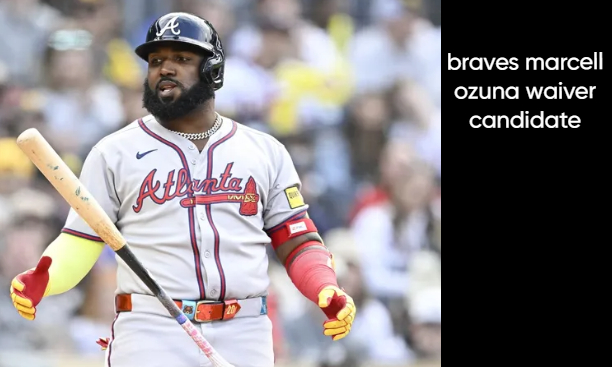
In modern Major League Baseball, roster decisions are no longer driven purely by raw talent or short-term performance. They are the outcome of multiple systems interacting in real time, including aging curves, financial models, performance analytics, and long-term strategy planning. Discussions about a player like Marcell Ozuna possibly being a waiver candidate for the Atlanta Braves almost never center on a single slump or isolated problem. It’s a systems-level decision.
At first glance, the phrase “waiver candidate” sounds transactional and straightforward. Underneath, however, teams must negotiate a complicated decision tree that balances factors including age, contract commitments, roster flexibility, performance volatility, and future expectations.
This essay examines Braves Marcell Ozuna waiver candidate status from a highly analytical standpoint, highlighting the significance of age and career path. We’ll treat it as a system design challenge, comprehending how inputs (age, metrics, contract) affect outputs (waiver decisions, roster optimization), as opposed to superficial sports comments.
What is Braves Marcell Ozuna Waiver Candidate Status: How Age and Career Path Play a Role
At its core, this topic revolves around understanding why a player like Marcell Ozuna might be considered for waivers, and specifically how age and career trajectory act as critical variables in that decision.
In MLB, placing a player on waivers means making them available to other teams under specific rules. It can lead to:
- A claim by another team
- A trade scenario
- Or outright release
But labeling a player as a waiver candidate doesn’t automatically mean the move will happen. Instead, it signals that:
The player’s current value-to-cost ratio, combined with future projections, may no longer align with the team’s strategic direction.
Why Age and Career Path Matter
In a vacuum, performance stats might suggest whether a player is contributing. But MLB front offices operate on predictive models, not just historical data. Age and career trajectory provide context such as:
- Is performance decline temporary or structural?
- Is the player nearing the typical regression phase?
- Does the contract align with projected future output?
For Ozuna, this becomes especially relevant because:
- He is no longer in his athletic prime
- His performance has shown variability across seasons
- His contract structure impacts roster flexibility
So the “waiver candidate” label is less about what he has done, and more about what he is expected to do next.
How It Works (Deep Technical Explanation)
To understand Braves Marcell Ozuna waiver candidate status, you need to think in terms of decision pipelines—similar to how distributed systems evaluate state changes.
Step 1: Data Ingestion (Performance Metrics)
Teams collect massive datasets, including:
- Batting averages
- OPS (On-base Plus Slugging)
- Exit velocity
- Barrel rate
- WAR (Wins Above Replacement)
These are not just stats—they’re inputs into predictive models.
Step 2: Aging Curve Modeling
Baseball analytics has well-established aging curves. These models estimate how players decline over time based on historical patterns.
For hitters:
- Peak performance typically occurs between ages 26–30
- Gradual decline starts early 30s
- Sharp drop-offs can occur mid-30s
Ozuna’s age places him in a high-risk zone for regression, which feeds directly into waiver considerations.
Step 3: Contract Evaluation Engine
Think of this as a cost-performance optimizer:
- Salary vs projected WAR
- Remaining contract years
- Opportunity cost (what younger players could deliver)
If projected value < contract cost → negative asset signal
Step 4: Roster Constraint Simulation
Teams simulate:
- 26-man roster configurations
- Bench depth
- Injury contingencies
- Minor league call-ups
If Ozuna’s roster spot limits flexibility, the system flags him as a potential optimization target.
Step 5: Decision Layer (Waiver Consideration)
Only after all these systems align does the “waiver candidate” label emerge.
It’s not emotional. It’s algorithmic.
Core Components
Understanding this system requires breaking down its internal components—not individually, but as interacting modules.
Performance Engine
This evaluates real-time output:
- Offensive consistency
- Situational hitting
- Power vs contact balance
Ozuna’s value has historically been tied to power hitting. When that declines, his overall value drops disproportionately.
Projection Engine
This is forward-looking:
- Uses historical comps
- Adjusts for age decline
- Applies regression models
If projections show diminishing returns, risk increases.
Financial Model
This integrates:
- Salary obligations
- Luxury tax considerations
- Budget allocation
A high salary + declining output = system inefficiency.
Roster Optimization Layer
This is where decisions get practical:
- Can a younger player replace him?
- Does he block development?
- Is there positional redundancy?
All these components converge to shape waiver candidacy.
Features and Capabilities
The Braves Marcell Ozuna waiver candidate status “system” is strong and complex due to a number of important features.
Predictive Decision-Making
Instead of reacting to poor performance, teams anticipate decline. This reduces risk and avoids late-stage contract burdens.
Dynamic Value Recalibration
A player’s value isn’t static. It updates continuously based on:
- Recent performance trends
- Injury status
- League-wide comparisons
Ozuna’s value fluctuates depending on streaks and slumps.
Scenario Simulation
Front offices run “what-if” simulations:
- What if Ozuna is removed?
- What if a prospect is promoted?
- What if salary is reallocated?
These simulations directly impact waiver decisions.
Real-World Use Cases
This framework isn’t unique to Ozuna. It’s widely used across MLB.
Veteran Contract Evaluation
Teams frequently reassess aging players with large contracts to determine if they still fit long-term plans.
Rebuilding vs Contending Teams
- Rebuilding teams prioritize youth and flexibility
- Contending teams prioritize immediate performance
The Braves, as contenders, must balance both—making Ozuna’s case more complex.
Mid-Season Adjustments
Waiver considerations often intensify mid-season when:
- Trade deadlines approach
- Injuries reshape rosters
- Performance trends become clearer
Advantages and Limitations
Advantages
The system behind waiver decisions offers:
- Data-driven accuracy
- Reduced emotional bias
- Long-term sustainability
It prevents teams from holding onto declining assets too long.
Limitations
However, it’s not perfect.
- Models can mispredict late-career resurgences
- Chemistry and clubhouse impact are hard to quantify
- Short-term performance spikes can distort projections
Ozuna himself has shown periods of strong resurgence, which complicates purely analytical decisions.
Comparison Section
To better understand Braves Marcell Ozuna waiver candidate status, it helps to compare with alternative roster strategies.
Keeping the Player
Pros:
- Stability
- Veteran presence
- Potential rebound
Cons:
- Financial burden
- Reduced flexibility
Trading the Player
Pros:
- Potential asset return
- Salary relief
Cons:
- Requires market demand
- May need to retain salary
Waiving the Player
Pros:
- Immediate roster flexibility
- Clears space for younger talent
Cons:
- Financial loss
- Risk of losing player for nothing
Each option operates within the same system but produces different outcomes.
Performance and Best Practices
From a strategic perspective, teams follow certain best practices when evaluating waiver candidates.
Avoid Late Decisions
Delaying action often increases cost. Early identification of decline allows smoother transitions.
Balance Metrics with Context
Raw stats must be contextualized:
- Ballpark effects
- Lineup protection
- Injury history
Maintain Pipeline Depth
A strong minor league system gives teams more flexibility to move on from veterans like Ozuna.
Future Perspective (2026 and Beyond)
The future of MLB roster management is becoming even more data-centric and predictive.
Key trends include:
- AI-driven player valuation models
- Real-time biometric tracking
- Advanced aging simulations
For players like Marcell Ozuna, this means:
- Less tolerance for prolonged decline
- Faster decision cycles
- Greater emphasis on adaptability
Teams like the Braves will continue refining these systems, making waiver decisions more precise and less reactive.
Conclusion
Braves Marcell Ozuna waiver candidate status is not a simple narrative about performance struggles. It’s the result of a deeply interconnected system where age, career trajectory, financial considerations, and predictive analytics converge.
Ozuna’s situation highlights a broader truth in modern baseball:
Teams are no longer managing players—they are managing systems of value.
Age acts as a predictive signal. Career trajectory provides context. Together, they shape decisions that ultimately determine whether a player remains part of a team’s future or becomes expendable.
Understanding this system doesn’t just explain Ozuna’s situation—it reveals how modern baseball actually works beneath the surface.
FAQs
1. What does it mean for Marcell Ozuna to be a waiver candidate?
It means the Braves may consider placing him on waivers, making him available to other teams based on performance, contract, and roster strategy.
2. Why does age matter in waiver decisions?
Age influences performance projections. Older players are statistically more likely to decline, increasing risk for teams.
3. Is Marcell Ozuna underperforming?
Performance varies by season, but waiver discussions typically arise when output doesn’t justify contract cost.
4. Can a player recover after being labeled a waiver candidate?
Yes. Many players experience rebounds, which is why teams must balance analytics with real-world unpredictability.
5. What role does contract size play?
A large contract increases pressure to perform. If production declines, the contract becomes a liability.
6. Are waiver decisions permanent?
No. Being a candidate doesn’t guarantee action. It’s part of an evaluation process.
7. How do teams predict player decline?
They use aging curves, historical comparisons, and advanced analytics models.
8. Could the Braves keep Ozuna despite these concerns?
Absolutely. If performance improves or strategic priorities shift, he can remain a valuable part of the roster.