
Introduction
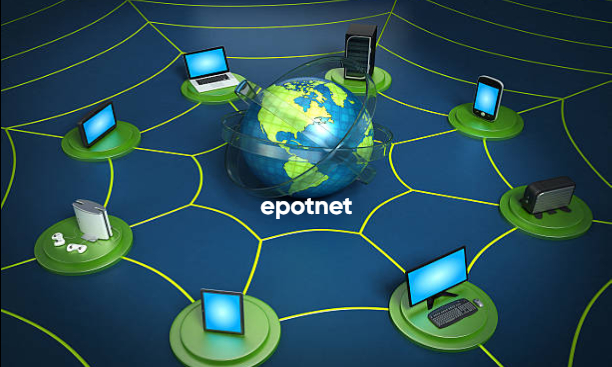
In contemporary software design, there is a recurrent trend: systems are becoming increasingly dispersed, asynchronous, and reliant on dependable data communication. A network of microservices, APIs, edge devices, and cloud workloads continuously communicating in real time has replaced what was once a straightforward client-server connection.
This change has highlighted a basic problem: how do you create a system that can manage intricate communication, scale effectively, withstand failure, and still be maintainable?
This is where Epotnet enters the conversation.
If you’ve come across the term and found little clarity, you’re not alone. Although the term “epotnet” has not yet been generally accepted, developers use it to refer to a modular, network-centric architecture layer or framework intended to control system orchestration, data flow, and communication protocols in distributed contexts.
Understanding Why Epotnet Matters: Understanding Its Role in Modern Digital Systems involves more than just picking up a new vocabulary; it involves recognizing a trend that illustrates how contemporary infrastructure is changing.
What is Epotnet?
Fundamentally, Epotnet is best understood as an orchestration framework and network abstraction layer that lies between underlying infrastructure and application logic.
Epotnet Definition in Practical Terms
Instead of thinking of Epotnet as a single tool or product, think of it as a design philosophy combined with a system layer that:
- Manages communication between distributed components
- Standardizes data flow and protocol handling
- Enables scalable and resilient system behavior
- Simplifies integration across heterogeneous systems
In simpler words:
Epotnet is the glue that keeps complex digital systems communicating efficiently and reliably.
Why Epotnet Exists
Traditional architectures struggle with:
- Tight coupling between services
- Poor scalability under load
- Complex networking logic spread across services
- Difficulty in monitoring and debugging
Epotnet solves these problems by introducing a centralized yet flexible communication model that abstracts the complexity of networking, routing, and orchestration.
The Problem It Solves
Modern systems require:
- Real-time data exchange
- Fault tolerance
- Horizontal scalability
- Cross-platform integration
The epotnet system addresses these needs by acting as an intelligent intermediary that governs how components interact.
How Epotnet Works (Deep Technical Explanation)

To understand how Epotnet works, you need to think in terms of data flow, message routing, and protocol abstraction.
The Core Working Principle
At runtime, the epotnet architecture operates as a layered system:
- Input Layer Incoming requests or data streams enter the epotnet network through defined endpoints.
- Processing Layer Epotnet applies routing logic, transformations, and protocol handling.
- Communication Layer It determines how data moves between services—synchronously or asynchronously.
- Output Layer Processed data is delivered to the target service or client.
Data Flow in Epotnet
Unlike traditional direct service-to-service communication, Epotnet introduces an intermediary data pipeline:
- Services don’t talk directly
- They communicate through the epotnet communication model
- Data is transformed, validated, and routed dynamically
This results in:
- Reduced coupling
- Better observability
- Easier scaling
Protocol Handling
Epotnet typically supports multiple epotnet protocols, such as:
- HTTP/REST
- WebSockets
- gRPC
- Message queues (Kafka-like systems)
Instead of forcing developers to manage each protocol individually, Epotnet abstracts them into a unified communication interface.
Event-Driven Behavior
A key aspect of how epotnet works is its event-driven nature:
- Events trigger workflows
- Services react to events rather than direct calls
- Systems become more resilient and decoupled
Core Components of the Epotnet System
Understanding the epotnet framework requires looking at how its internal components interact rather than treating them as isolated parts.
1. Communication Engine
This is the heart of the epotnet platform.
It handles:
- Message routing
- Protocol translation
- Load balancing
The engine ensures that communication remains efficient regardless of system complexity.
2. Data Transformation Layer
Raw data rarely moves cleanly between services. This layer:
- Formats data
- Validates schemas
- Applies transformations
It ensures consistency across the epotnet environment.
3. Orchestration Layer
This layer defines workflows:
- Which service gets called
- In what order
- Under what conditions
Think of it as the brain of the epotnet system.
4. Monitoring and Logging System
Observability is built-in:
- Tracks requests across services
- Logs failures and retries
- Provides debugging insights
This is crucial for epotnet troubleshooting.
5. Security Layer
Handles:
- Authentication
- Authorization
- Encryption
Ensures epotnet security without burdening individual services.
Features and Capabilities
Epotnet isn’t just about routing messages—it introduces capabilities that fundamentally change how systems behave.
Unified Communication Model
Instead of juggling multiple APIs and protocols, developers interact with a single communication interface.
This reduces complexity and improves maintainability.
Dynamic Routing
Routing decisions aren’t hardcoded:
- Based on load
- Based on availability
- Based on business rules
This improves epotnet efficiency.
Built-in Scalability
Epotnet supports horizontal scaling:
- Services can scale independently
- Traffic is distributed intelligently
This is key to epotnet scalability.
Fault Tolerance
Failures are expected—and handled:
- Automatic retries
- Fallback mechanisms
- Circuit breakers
Observability
Real-time insights into:
- Data flow
- Latency
- Errors
Critical for production systems.
Real-World Use Cases
The epotnet use cases are diverse and span multiple industries.
Microservices Architecture
Epotnet acts as a service mesh-like layer:
- Manages communication between microservices
- Handles retries and failures
- Improves reliability
Cloud Computing
In epotnet in cloud computing, it helps:
- Manage distributed workloads
- Handle scaling dynamically
- Optimize resource usage
IoT Systems
IoT devices generate massive data streams.
Epotnet helps by:
- Managing real-time data ingestion
- Routing data efficiently
- Handling intermittent connectivity
Enterprise Systems
Large organizations use Epotnet for:
- System integration
- Legacy modernization
- Workflow orchestration
Advantages and Limitations
Advantages of Epotnet
- Reduces system complexity
- Improves scalability
- Enhances fault tolerance
- Simplifies integration
- Provides better observability
Limitations
No system is perfect.
- Adds an extra layer of abstraction
- Can introduce latency if poorly configured
- Requires learning curve
- Debugging can become complex in large setups
Comparison with Alternatives
Epotnet is often compared with:
Traditional API Gateways
- Limited to request routing
- Less flexible than epotnet architecture
Service Mesh (e.g., Istio)
- Similar goals
- Epotnet tends to be more flexible in protocol abstraction
Message Brokers
- Focus on async communication
- Epotnet supports both sync and async
The key difference is that epotnet technology combines multiple capabilities into a unified system.
Performance and Best Practices
Optimize Data Flow
- Minimize unnecessary transformations
- Use efficient serialization formats
Use Caching
- Reduce repeated processing
- Improve latency
Monitor Continuously
- Track performance metrics
- Identify bottlenecks early
Follow Modular Design
- Keep services loosely coupled
- Avoid monolithic patterns within epotnet
Handle Failures Gracefully
- Implement retries
- Use circuit breakers
Future Perspective (2026 and Beyond)
The trajectory of epotnet future trends aligns with:
- Edge computing
- AI-driven orchestration
- Serverless architectures
As systems grow more complex, the need for intelligent communication layers will only increase.
Epotnet is not just relevant—it’s becoming essential.
Conclusion
Understanding Why Epotnet Matters: Understanding Its Role in Modern Digital Systems comes down to one simple realization:
Modern systems are no longer about isolated components—they are about connected ecosystems.
Epotnet provides the structure that allows these ecosystems to function efficiently, reliably, and at scale.
For developers, it represents a shift in thinking—from building standalone services to designing interconnected, resilient systems.
FAQs
1. What is Epotnet in simple terms?
Epotnet is a system or framework that manages communication, data flow, and orchestration between different parts of a distributed application.
2. How does Epotnet improve system performance?
By optimizing routing, reducing direct dependencies, and enabling scalable communication models.
3. Is Epotnet similar to a service mesh?
It shares similarities but typically offers broader capabilities, including protocol abstraction and workflow orchestration.
4. Where is Epotnet used?
In cloud systems, microservices architectures, IoT platforms, and enterprise integrations.
5. What are the main benefits of Epotnet?
Scalability, flexibility, fault tolerance, and simplified system communication.
6. Does Epotnet replace APIs?
No, it works alongside APIs by managing how they communicate.
7. Is Epotnet difficult to implement?
It requires understanding distributed systems, but once implemented, it simplifies long-term system management.
8. What is the future of Epotnet?
It is expected to evolve with AI-driven automation, edge computing, and next-generation cloud architectures.