
Introduction
Water infrastructure failures rarely make headlines until they suddenly disrupt everyday life. From an engineering standpoint, a burst pipe beneath a major metropolitan road may seem like a minor technical issue, but on the ground, it quickly becomes a massive public disruption that affects emergency services, homes, businesses, and transportation..
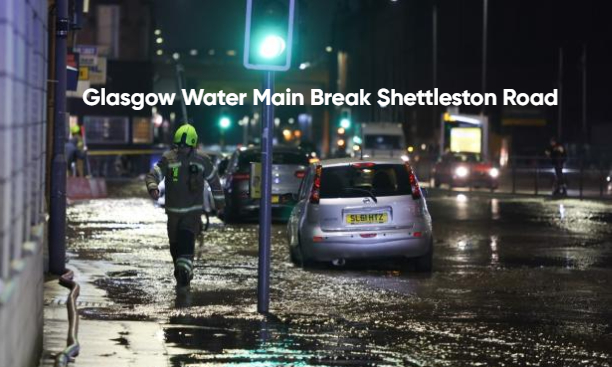
An excellent illustration of how brittle old subterranean infrastructure can become when subjected to constant strain from traffic load, soil movement, and decades of material wear is the Glasgow water main break Shettleston Road incident.. For residents, it appears suddenly: flooding on the street, reduced water pressure, or complete loss of supply. For engineers, however, it is the visible symptom of a long, slow degradation process happening beneath the surface.
This article breaks down What Happened During the Glasgow Water Main Break Shettleston Road? A Full Incident Breakdown in a structured, technical, and human-readable way. We will go beyond surface reporting and explore how such failures occur, how systems respond, and what lessons can be learned from the event.
What is What Happened During the Glasgow Water Main Break Shettleston Road? A Full Incident Breakdown?
Although the phrase seems like a news item at first, it actually refers to an urban water distribution failure event that was centered around a crucial pipeline portion in Glasgow’s Shettleston Road.
When a high-pressure water distribution pipe breaks, massive amounts of treated water are released into the surrounding soil and surface regions, causing a water main break. A localized breakdown in the subterranean distribution network that supplies residential and commercial sectors is referred to as the Glasgow water main break Shettleston Road event.
To understand why this matters, it’s important to recognize what water mains do:
They are the backbone of urban water delivery systems, transporting potable water from treatment plants to end users through pressurized pipelines. When one of these mains fails, the system loses controlled flow, and water follows the path of least resistance—often upward through roads, pavements, or nearby properties.
The “incident breakdown” aspect refers to analyzing:
- Why the pipe failed
- How pressure dynamics changed
- How the distribution network reacted
- How emergency teams isolated and repaired the system
So, What Happened During the Glasgow Water Main Break Shettleston Road? A Full Incident Breakdown is essentially an engineering dissection of a real-world infrastructure failure.
How It Works (Deep Technical Explanation)
To understand the Shettleston Road water main break, you need to understand how a pressurized water distribution system behaves under stress.
Pressurized Network Behavior
Urban water systems like Glasgow’s operate on a closed-loop pressurized distribution model. Water is pushed through large trunk mains and then distributed into smaller secondary and tertiary pipelines.
Under normal conditions:
- Pressure is regulated through pumping stations and valves
- Flow is balanced across districts
- Pipes maintain structural integrity under static load
However, when a rupture occurs, the system immediately shifts from controlled flow to uncontrolled discharge.
Failure Initiation
In most cases similar to the Glasgow water main break Shettleston Road, failure begins with one of the following:
- Material fatigue in older cast iron or steel pipes
- Joint separation due to ground movement
- Corrosion weakening pipe walls
- Sudden pressure surge (water hammer effect)
Once the pipe wall integrity drops below a critical threshold, internal pressure forces water outward rapidly, creating an expanding fracture.
Propagation Phase
After the initial break, the system enters a propagation phase:
- Water escapes at high velocity
- Soil surrounding the pipe becomes saturated
- Underground voids begin to form
- Surface deformation starts appearing on roads
This is why road collapse or surface flooding often happens quickly.
Isolation Phase
Water authorities typically attempt to isolate the affected segment using valve networks. This involves:
- Closing upstream and downstream valves
- Redirecting water through alternative mains
- Reducing system pressure in the affected zone
However, full isolation is not always immediate due to system complexity and valve accessibility.
Stabilization and Repair
Once isolated, engineers move into repair mode:
- Excavation of the affected section
- Removal of damaged pipe segment
- Replacement with new pipe materials (often modern polyethylene or ductile iron)
- Pressure testing before reactivation
Core Components Involved
The Glasgow water main break Shettleston Road incident involves multiple interconnected infrastructure components working as a single system.
Primary Water Main
This is the main high-capacity pipe responsible for transporting bulk water. Its failure is the central issue.
Secondary Distribution Lines
These branch off the main and supply nearby neighborhoods. They are indirectly affected by pressure drops.
Valve Control Network
Valves act as control points to isolate sections. Their responsiveness determines how quickly the system can be stabilized.
Pressure Regulation Systems
Pump stations and pressure reducers maintain system equilibrium. When a rupture occurs, these systems may overcompensate or destabilize temporarily.
Road and Subsurface Structure
An often-overlooked component is the surrounding environment:
- Soil density
- Road layering
- Underground utility congestion
These factors influence how the break manifests at the surface.
Features and Capabilities of the System (Engineering Perspective)
Urban water systems are designed with resilience in mind, but they are not immune to failure. The Shettleston Road incident highlights several system capabilities and weaknesses.
Continuous Supply Under Pressure
The system maintains constant pressure to ensure water reaches all elevations, even in multi-storey buildings. This requires careful balancing, but also introduces stress on older pipes.
Automatic Flow Redistribution
When a drop in pressure is detected, the system attempts to reroute water automatically. This helps minimize outages but can delay isolation of leaks.
Fault Detection Through Pressure Anomalies
Modern monitoring systems can detect:
- Sudden pressure drops
- Flow inconsistencies
- Unusual demand spikes
These indicators often signal a burst before visual confirmation.
Physical Limitation of Aging Infrastructure
Many urban systems still rely on decades-old pipes. These materials were not designed for today’s traffic loads and urban density, making them more vulnerable to failure.
Real-World Use Cases (Why This Matters Beyond One Incident)
The Glasgow water main break Shettleston Road is not an isolated case—it reflects broader infrastructure challenges.
Urban Water Management Systems
City engineers study such incidents to improve:
- Pipeline replacement schedules
- Pressure optimization models
- Emergency response strategies
Infrastructure Risk Modeling
Data from breaks like this feeds predictive models that estimate:
- Probability of pipe failure
- High-risk zones in urban networks
- Maintenance prioritization
Emergency Response Planning
Municipal teams use these scenarios to refine:
- Response time targets
- Resource allocation strategies
- Public communication systems
Smart City Integration
Modern cities integrate sensor data to predict failures before they occur. Events like this highlight where digital monitoring still needs improvement.
Advantages and Limitations
Advantages of the Existing System
Despite failures, the water distribution system has strengths:
- Large-scale redundancy ensures partial service continuity
- Segment isolation allows localized repairs
- High-pressure delivery supports entire city populations
Limitations Exposed by the Incident
However, the Glasgow water main break Shettleston Road highlights key weaknesses:
- Aging pipe infrastructure prone to fatigue
- Slow detection in some legacy sections
- Disruption-heavy repair processes
- Dependency on manual excavation and inspection
Comparison with Similar Infrastructure Systems
When comparing Glasgow’s system with modern water infrastructure models globally, several differences emerge.
Modern Smart Water Networks
Newer systems use:
- IoT-based pressure sensors
- Real-time leak detection
- Automated valve control systems
These reduce detection time significantly.
Traditional Urban Systems
Older systems like parts of Glasgow:
- Rely on periodic inspection
- Use reactive maintenance rather than predictive
- Have slower isolation response times
Hybrid Systems
Some cities combine both approaches, upgrading critical zones while maintaining legacy infrastructure elsewhere.
Performance and Best Practices
From an engineering standpoint, preventing incidents like the Glasgow water main break Shettleston Road involves multiple strategies.
Predictive Maintenance
Instead of waiting for failure:
- Use pressure trend analysis
- Monitor pipe vibration signatures
- Track soil movement near pipelines
Infrastructure Upgrades
Replacing aging pipes with:
- Ductile iron
- High-density polyethylene (HDPE)
reduces failure rates significantly.
Pressure Optimization
Excess pressure is one of the leading causes of pipe bursts. Smart regulation reduces stress on infrastructure.
Faster Isolation Protocols
Improving valve accessibility and automation helps reduce damage spread.
Future Perspective (2026 and Beyond)
Water infrastructure is entering a transition phase.
By 2026 and beyond, cities like Glasgow are expected to adopt:
- AI-based predictive failure detection
- Fully digitized pipeline mapping
- Automated emergency shutoff systems
- Real-time citizen notification systems
The Glasgow water main break Shettleston Road represents the kind of legacy-system failure that modern upgrades aim to eliminate.
However, full modernization takes time, funding, and careful integration with existing networks.
Conclusion
The What Happened During the Glasgow Water Main Break Shettleston Road? A Full Incident Breakdown is more than a local disruption story—it is a window into how complex and delicate urban infrastructure really is.
A single pipe failure triggers a chain reaction involving pressure shifts, emergency isolation, road disruption, and large-scale repair coordination. While the surface-level impact is visible to residents, the underlying system behavior is deeply technical and highly interconnected.
Understanding these events helps engineers, city planners, and the public appreciate the importance of infrastructure investment and proactive maintenance. As cities grow and systems age, the need for smarter, more resilient water networks becomes not just beneficial—but essential.
FAQs
1. What caused the Glasgow water main break on Shettleston Road?
Most water main breaks are caused by pipe aging, pressure fluctuations, corrosion, or ground movement affecting underground infrastructure.
2. Why do water mains fail in cities like Glasgow?
Older infrastructure, combined with constant pressure and traffic load above ground, increases the likelihood of pipe fatigue and rupture.
3. How long does it take to repair a water main break?
Depending on severity, repairs can take several hours to multiple days, including excavation, replacement, and system testing.
4. Why does a water main break cause road flooding?
High-pressure water escapes rapidly and follows the path of least resistance, often surfacing through roads and pavements.
5. How do authorities fix a broken water main?
They isolate the section, excavate the pipe, replace damaged segments, and gradually restore pressure after testing.
6. Can water main breaks be prevented?
They can be reduced significantly through predictive maintenance, infrastructure upgrades, and real-time monitoring systems.
7. Is water safe after a main break?
Usually yes, but authorities may issue temporary boil water advisories until system stability is confirmed.
8. Why is Shettleston Road prone to such incidents?
Like many urban corridors, it may contain older pipeline sections that are more vulnerable to long-term wear and pressure stress.