
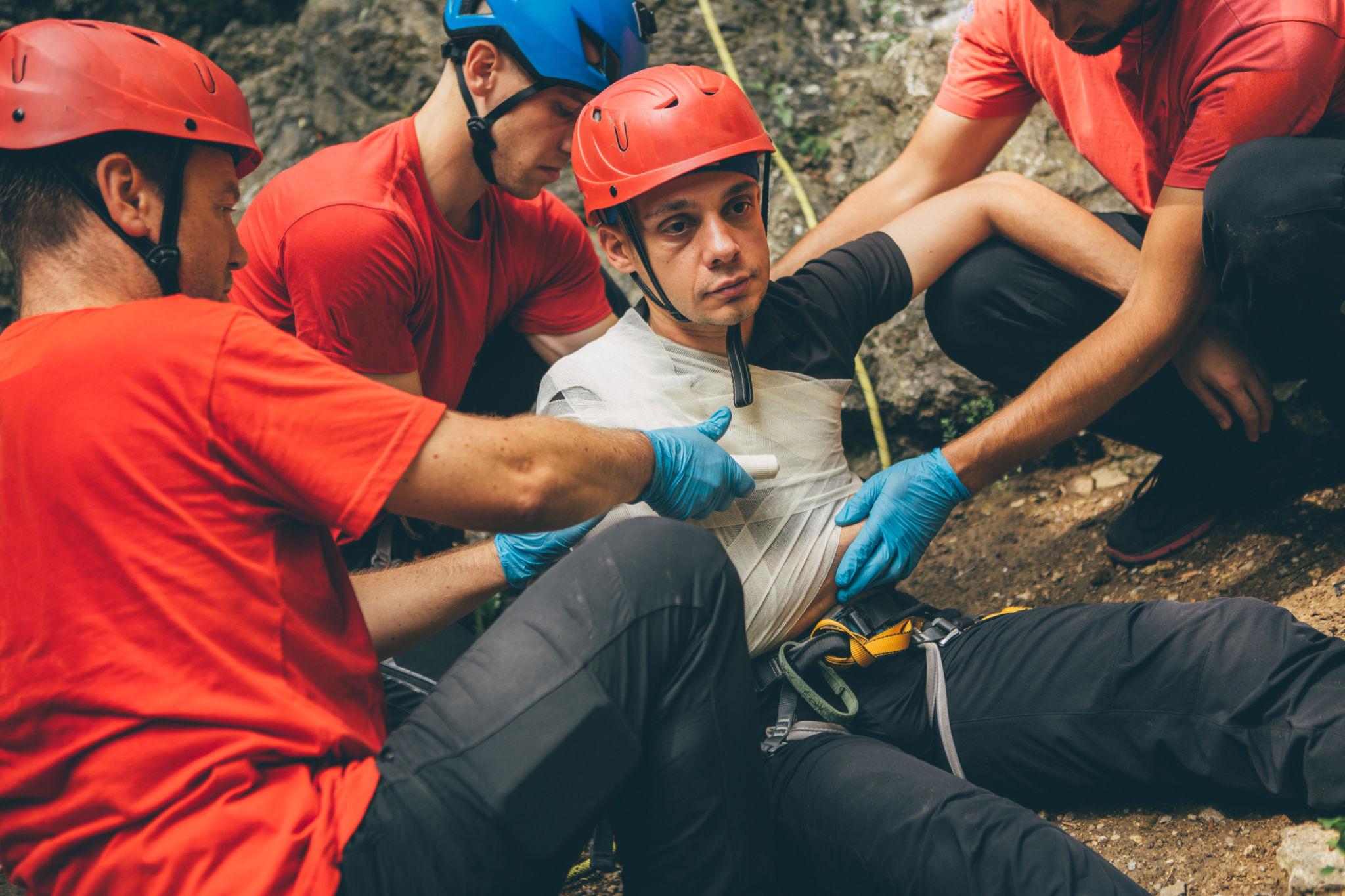
When something goes wrong on a remote trail, the gap between incident and response becomes painfully real. There’s no street address, no reliable cell signal, and often no immediate access for vehicles. In those moments, emergency response isn’t just about speed—it’s about coordination, data accuracy, terrain awareness, and communication resilience.
That’s where the Safe Trails Task Force Fremont County steps in.
It’s not just about public safety to comprehend how the Safe Trails Task Force Fremont County supports emergency response on trails; it’s also about how contemporary systems, organized workflows, and community-driven infrastructure work together to address a very complicated issue. What they’ve created is essentially a distributed, human-centered emergency response framework that is designed for unexpected circumstances if you approach it from an engineering or systems-thinking perspective.
This article breaks down that system in depth—how it works, what powers it, where it succeeds, and where it still struggles.
What is How the Safe Trails Task Force Fremont County Supports Emergency Response on Trails?
Fundamentally, this idea refers to a coordinated structure created by the Fremont County Safe Trails Task Force to enhance the detection, reporting, and management of emergencies in trail environments.
But that definition is too shallow to be useful.
A better way to think about it is as a multi-layered response architecture that combines:
- Human reporting systems (hikers, volunteers, rangers)
- Environmental intelligence (trail mapping, hazard zones)
- Communication pathways (radio, satellite, limited cellular fallback)
- Coordination protocols (between rescue teams, law enforcement, and medical units)
The problem it solves is straightforward but technically challenging:
How do you respond to emergencies in environments that lack structured infrastructure?
Unlike urban emergency systems, trail environments introduce constraints:
- No fixed addressing system
- Limited or zero connectivity
- Difficult terrain for access
- Delayed incident discovery
- High variability in conditions (weather, wildlife, terrain hazards)
Under these limitations, the Safe Trails Task Force aims to improve response accuracy and decrease response latency.
How It Works (Deep Technical Explanation)
To understand how the Safe Trails Task Force Fremont County supports emergency response on trails, you have to break it down like a distributed system with unreliable nodes.
1. Incident Detection Layer
Everything starts with detection.
Unlike automated systems, detection here is mostly human-triggered:
- A hiker reports an injury
- A missing person is flagged
- A volunteer notices a hazard or distress signal
But the system improves detection reliability through:
- Trail signage with emergency contact instructions
- QR-coded markers (in some areas)
- Public awareness campaigns
Think of this as an event trigger system—low automation, high dependency on user interaction.
2. Location Resolution Layer
This is where things get interesting.
Since GPS accuracy can vary and users often don’t know their exact location, the system uses:
- Pre-mapped trail segments
- Landmark-based identification
- Mile markers and trail IDs
- Offline mapping references
In engineering terms, this is a fallback geolocation strategy—when precise coordinates fail, the system uses contextual approximation.
This dramatically improves dispatch accuracy.
3. Communication Routing Layer
Once an incident is reported, the information needs to travel through constrained channels.
The task force relies on a hybrid communication model:
- Cellular networks (when available)
- Radio systems (primary fallback)
- Satellite communication (in extreme cases)
Instead of assuming connectivity, the system is built around graceful degradation—it continues to function even when primary channels fail.
4. Dispatch Coordination Layer
Here, the system begins to resemble a backend orchestration engine.
Incoming incident data is routed to:
- Search and Rescue (SAR) teams
- Local law enforcement
- Emergency medical services
The task force acts as a middleware layer, ensuring:
- Correct team selection
- Priority classification
- Resource allocation
This avoids redundant deployments and reduces response time.
5. Field Execution Layer
Once teams are dispatched, the focus shifts to execution:
- Navigating terrain using mapped routes
- Adjusting based on weather or obstacles
- Maintaining communication with command
This is where pre-planning pays off. Trails are analyzed in advance, so responders don’t operate blindly.
Core Components
The system isn’t powered by a single tool—it’s an ecosystem.
Mapping Infrastructure
Trail mapping is foundational. Without it, everything collapses.
The task force maintains:
- Trail segmentation data
- Hazard zones
- Entry/exit points
- Elevation profiles
This functions like a spatial database—queryable, structured, and continuously updated.
Communication Framework
Instead of relying on a single network, the system uses layered communication:
- Primary: mobile networks
- Secondary: radio frequencies
- Tertiary: satellite
This redundancy is intentional—similar to multi-region failover in cloud systems.
Volunteer Network
Volunteers are not just helpers—they are distributed nodes in the system.
They provide:
- Early incident detection
- On-site assistance
- Local knowledge
Without them, the system loses coverage density.
Coordination Protocols
These are predefined workflows that determine:
- Who responds
- How they respond
- In what sequence
This is equivalent to workflow orchestration logic in software systems.
Features and Capabilities
Rapid Incident Localization
Instead of relying purely on GPS, the system uses contextual mapping to identify locations faster.
Why it matters: GPS errors in mountainous terrain can be deadly. Context-aware mapping reduces that risk.
Multi-Channel Communication
The system doesn’t break when one channel fails.
Why it matters: Reliability under failure is what separates a working system from a resilient one.
Predefined Response Protocols
No guesswork during emergencies.
Why it matters: Decision latency kills time. Protocols remove hesitation.
Community Integration
Public awareness is built into the system.
Why it matters: A system that relies on humans must train those humans.
Real-World Use Cases
Missing Hiker Scenario
A hiker fails to return.
- Last known trail segment identified
- Search radius defined using mapping data
- SAR teams deployed with optimized routes
This reduces search time significantly.
Injury on Remote Trail
A cyclist crashes in a low-connectivity zone.
- Report sent via partial signal
- Location approximated via trail marker
- Nearest response team dispatched
Without this system, response could be delayed by hours.
Environmental Hazard Reporting
A landslide blocks a trail.
- Volunteer reports hazard
- Task force logs and broadcasts update
- Future incidents prevented
Advantages and Limitations
Advantages
- Strong resilience in low-connectivity environments
- Community-driven scalability
- Reduced emergency response time
- Better coordination across agencies
Limitations
- Heavy reliance on human reporting
- Limited automation
- Resource constraints in rural areas
- Inconsistent coverage across all trails
From an engineering perspective, the biggest limitation is lack of real-time telemetry.
Comparison with Traditional Emergency Systems
| Aspect | Trail Response System | Urban Emergency System |
|---|---|---|
| Location Accuracy | Context-based | GPS + Address |
| Connectivity | Unreliable | Stable |
| Detection | Human-triggered | Automated + Human |
| Access | Terrain-dependent | Road-based |
| Coordination | Multi-agency manual | Centralized dispatch |
The Safe Trails Task Force system is essentially a specialized adaptation of traditional emergency infrastructure.
Performance and Best Practices
If you were designing a similar system, here’s what stands out:
Prioritize Redundancy
Never depend on a single communication channel.
Use Contextual Data
When precision fails, context saves.
Train the Edge (Users)
Users are part of the system. Treat them like interfaces.
Optimize for Failure
Design for worst-case scenarios, not ideal conditions.
Future Perspective (2026 and Beyond)
Looking ahead, the system is likely to evolve with:
- IoT-based trail sensors
- Satellite-first communication tools
- AI-driven incident prediction
- Real-time GPS beacon integration
However, the human element will remain central.
Even with advanced tech, human presence on trails is unavoidable, which means hybrid systems will continue to dominate.
Conclusion
Understanding how the Safe Trails Task Force Fremont County supports emergency response on trails reveals something deeper than a local safety initiative.
It shows how systems thinking, community participation, and layered infrastructure can solve problems in environments where traditional solutions fail.
From a technical standpoint, it’s a fascinating example of:
- Distributed systems without reliable connectivity
- Human-in-the-loop architecture
- Resilience-first design
And from a practical standpoint, it saves lives.
FAQs
1. What does the Safe Trails Task Force Fremont County actually do?
It coordinates trail safety efforts, improves emergency response systems, and connects agencies and communities to respond more effectively to incidents.
2. How are emergencies reported on remote trails?
Mostly through hikers, volunteers, or limited communication tools like mobile signals or radios.
3. Why is trail emergency response more difficult than urban response?
Because of poor connectivity, lack of precise location data, and difficult terrain access.
4. Does the system rely on technology or people?
Both—but heavily on people. Technology supports, but humans trigger and guide the process.
5. Can this model be used in other regions?
Yes, especially in rural or mountainous areas where traditional emergency systems struggle.
6. What are the biggest challenges faced by the system?
Limited resources, reliance on manual reporting, and inconsistent network coverage.
7. Is GPS enough for trail emergency response?
Not always. The system often relies on contextual mapping to compensate for GPS inaccuracies.