
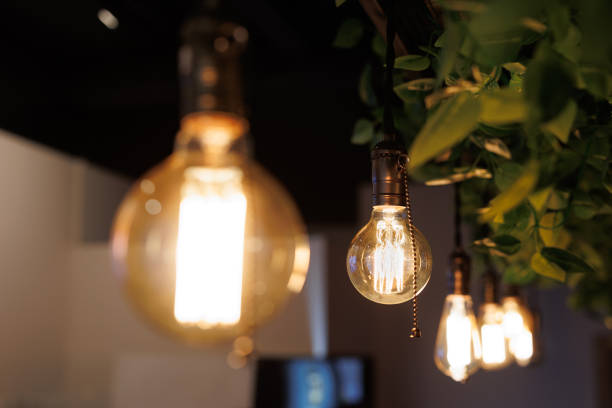
Introduction
When you look for Edison LED Daraz, you’ll soon encounter a common confusion: one bulb claims 6W, another 10W, a third highlights 800 lumens, and there’s a vague promise of “high efficiency” somewhere in the description.
At first glance, it feels like comparing APIs with incomplete documentation. The numbers are there—but the meaning is fragmented. And if you’ve ever bought a bulb that looked great on paper but disappointed in real use, you’ve already experienced the cost of misunderstanding these metrics.
This isn’t just a consumer problem—it’s a systems problem. Wattage, lumens, and efficiency are not isolated values. They form a relationship, almost like input-output metrics in a performance-critical system. If you misinterpret one, your entire expectation pipeline breaks.
In this guide, we’ll go deep into Understanding Wattage, Lumens, and Efficiency in Edison LED Daraz Listings—not just at a surface level, but in a way that connects physics, electrical engineering, and real-world usage. Think of it as reverse-engineering the “spec sheet” of lighting.
What is Understanding Wattage, Lumens, and Efficiency in Edison LED Daraz Listings?
At its core, this topic is about decoding three interconnected metrics that define how an LED bulb performs:
- Wattage (W) → Power consumption (input)
- Lumens (lm) → Light output (output)
- Efficiency (lm/W) → Conversion ratio (performance)
Most Daraz listings show these values, but rarely explain how they relate. That’s the gap.
Understanding Wattage, Lumens, and Efficiency in Edison LED Daraz Listings means:
- Translating raw specifications into real-world brightness
- Identifying misleading or incomplete product descriptions
- Mapping electrical consumption to visible output
- Evaluating whether a bulb is optimized or wasteful
Historically, people used wattage as a proxy for brightness. That worked with incandescent bulbs because the system was inefficient but predictable. A 60W bulb meant “moderately bright.”
LEDs break that assumption.
Two Edison LED bulbs can both be 6W—but one may produce 500 lumens, while another produces 800 lumens. Same input, different output. That’s where efficiency enters.
So the real question isn’t “how many watts?” but rather:
“How effectively does this bulb convert electricity into usable light?”
How It Works (Deep Technical Explanation)
To understand this properly, you need to think of an LED bulb as a miniature energy conversion system.
The Energy Flow Model
Electricity enters the bulb as alternating current (AC). Inside the bulb, a driver circuit converts this into direct current (DC), suitable for LEDs. The LED chips then convert electrical energy into photons (light).
But not all energy becomes light. A portion is lost as heat.
So the system looks like this:
Input Energy (Watts) → Conversion Layer → Output (Lumens + Heat Loss)
The goal of LED engineering is to maximize lumens while minimizing heat.
Wattage: The Input Constraint
Wattage represents how much power the bulb draws from the grid. It’s essentially your “resource allocation.”
However, in LED systems, wattage alone tells you nothing about brightness. It only tells you how much energy is being consumed, not how well it’s used.
Lumens: The Output Signal
Lumens measure perceived brightness. Not raw energy, but how the human eye perceives light.
This is critical. Human vision is more sensitive to certain wavelengths (green-yellow region), so lumens are weighted accordingly.
That’s why two bulbs with identical energy output can appear different in brightness.
Efficiency: The Conversion Ratio
Efficiency is where things get interesting:
Efficiency = Lumens / Wattage
If a bulb produces:
- 800 lumens at 10W → 80 lm/W
- 800 lumens at 6W → ~133 lm/W
The second bulb is significantly more efficient.
In engineering terms, this is like comparing two algorithms that produce the same output—but one uses fewer resources.
Core Components
An Edison LED bulb isn’t just a filament—it’s a layered system. Understanding its internal architecture helps explain variations in Daraz listings.
LED Filament Structure
Edison-style LEDs are similar to old-fashioned filament bulbs, except they use phosphor-coated LED filaments in place of tungsten wire.
These filaments:
- Emit light in all directions (omnidirectional)
- Are optimized for aesthetic warmth
- Often trade slight efficiency for visual appeal
Driver Circuit
This is the brain of the bulb. It:
- Converts AC to DC
- Regulates voltage and current
- Prevents flickering
Low-quality drivers are a major reason why some bulbs underperform despite good specs.
Thermal Management System
Heat is the enemy of efficiency and lifespan.
Better bulbs use:
- Glass designs for passive cooling
- Internal gas (like helium) to dissipate heat
If thermal design is poor, efficiency drops over time—even if initial lumens look impressive.
Phosphor Coating
This layer converts blue LED light into warmer tones.
However, phosphor conversion introduces losses. That’s why warmer bulbs (e.g., 2200K) often have slightly lower efficiency than cooler ones.
Read More: How Apkprotech.com Helps Users Discover Android Applications Efficiently
Features and Capabilities
Daraz listings often highlight features without context. Let’s unpack what actually matters.
High Lumen Output at Low Wattage
This is the hallmark of a good LED.
A well-engineered Edison bulb might deliver:
- 600–800 lumens at just 6–8W
That’s comparable to a 60W incandescent bulb, but with ~85% less energy use.
Color Temperature Control
Measured in Kelvin (K), this affects mood and perception:
- 2200K → Warm, vintage glow
- 2700K → Soft white
- 4000K+ → Neutral/cool
Warmer tones often sacrifice a bit of efficiency due to phosphor conversion losses.
Dimming Capability
Some Edison LEDs support dimmers, but compatibility depends on the driver circuit.
Poor dimming performance often indicates:
- Low-quality driver design
- Inconsistent current regulation
Longevity Metrics
Listings may claim 15,000–25,000 hours, but real lifespan depends on:
- Thermal management
- Driver quality
- Voltage stability
Real-World Use Cases
Understanding Wattage, Lumens, and Efficiency in Edison LED Daraz Listings becomes practical when applied to real scenarios.
Ambient Lighting in Homes
Edison LEDs are often used for:
- Living rooms
- Bedrooms
- Decorative fixtures
Here, efficiency matters less than visual warmth and distribution.
Commercial Spaces
Cafés and restaurants use Edison bulbs for atmosphere.
In such cases:
- Slightly lower efficiency is acceptable
- Consistent brightness and color rendering matter more
Energy-Conscious Installations
For large setups (hotels, offices), efficiency becomes critical.
Saving even 2W per bulb across 100 bulbs results in significant long-term savings.
Advantages and Limitations
Advantages
Edison LED bulbs offer a compelling mix of aesthetics and performance:
- Significantly lower energy consumption compared to incandescent bulbs
- Long lifespan when properly engineered
- Minimal heat emission relative to traditional lighting
- Visually appealing filament design
Limitations
But they’re not perfect:
- Slightly lower efficiency compared to standard LED bulbs
- Higher upfront cost
- Performance depends heavily on driver quality
- Warm tones reduce lumen output
Comparison Section
Edison LED vs Standard LED Bulbs
Standard LEDs:
- Higher efficiency (up to 150 lm/W)
- Directional light
Edison LEDs:
- Lower efficiency (typically 80–120 lm/W)
- Omnidirectional and aesthetic
LED vs Incandescent
Incandescent:
- ~10–15 lm/W
- High heat loss
LED:
- 80–150 lm/W
- Minimal energy waste
This is not just an upgrade—it’s a complete paradigm shift.
Performance and Best Practices
If you’re evaluating Daraz listings, think like a performance engineer.
Don’t Judge by Wattage Alone
Always correlate wattage with lumens. A low-watt bulb isn’t useful if lumen output is poor.
Look for lm/W Ratio
This is your most reliable performance metric.
Check Consistency
If a listing claims:
- High lumens
- Very low wattage
- Extremely long lifespan
Be cautious. These claims often don’t coexist in budget products.
Consider Use Context
- Decorative lighting → prioritize warmth and design
- Functional lighting → prioritize efficiency
Future Perspective (2026 and Beyond)
LED technology is still evolving.
We’re seeing improvements in:
- Filament efficiency
- Smart driver integration
- Adaptive color temperature systems
In the next few years, expect Edison LEDs to close the efficiency gap with standard LEDs while maintaining their aesthetic appeal.
Daraz listings will likely become more standardized, but until then, understanding these metrics remains essential.
Conclusion
Understanding Wattage, Lumens, and Efficiency in Edison LED Daraz Listings isn’t just about reading specs—it’s about interpreting a system.
Wattage tells you the cost. Lumens tell you the output. Efficiency tells you the truth.
Once you start thinking in these terms, listings stop being confusing. They become predictable, comparable, and actionable.
And that’s the difference between buying a bulb—and choosing the right one.
FAQs
1. What matters more: wattage or lumens?
Lumens matter more because they represent actual brightness. Wattage only indicates energy consumption.
2. What is a good efficiency for Edison LED bulbs?
Typically, 80–120 lumens per watt is considered good for Edison-style LEDs.
3. Why do some low-watt bulbs look dim?
Because wattage doesn’t guarantee brightness. Low lumen output is the real issue.
4. Are Edison LEDs less efficient than standard LEDs?
Yes, slightly. Their design prioritizes aesthetics over maximum efficiency.
5. How can I verify claims in Daraz listings?
Check for realistic ratios between wattage and lumens. Extremely high claims are often exaggerated.
6. Does color temperature affect efficiency?
Yes. Warmer tones (lower Kelvin) usually result in slightly lower efficiency.
7. Can I use Edison LEDs for task lighting?
You can, but they are better suited for ambient or decorative lighting.
8. Why do some bulbs flicker even with good specs?
This usually indicates a low-quality driver circuit, not an issue with wattage or lumens.