
Introduction
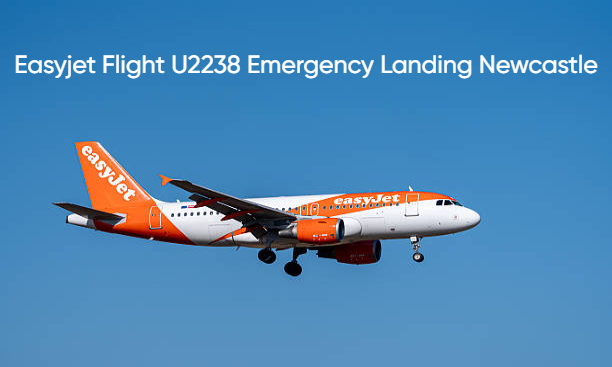
The Easyjet Flight U2238 Emergency Landing Newcastle Explained essentially describes the organized series of events that take place when an EasyJet commercial aircraft (flight U2238) is compelled to veer off course and land at a different airport, in this case Newcastle.
But to understand this properly, we need to step back and treat it like a distributed system failure event.
In aviation systems, a flight is not just a machine in the sky—it is a real-time data-driven operation involving:
- Aircraft onboard systems (sensors, diagnostics, avionics)
- Pilot decision-making loops
- Airline operations control centers
- Air traffic control (ATC) networks
- Ground emergency response teams
When one anomaly is detected—such as a technical fault, medical emergency, cabin pressure irregularity, or navigation warning—the system does not “fail.” Instead, it transitions into a controlled safety mode.
So, the timeline is not just a story. It is a sequence of safety state transitions.
In the case of U2238, the diversion to Newcastle represents the system selecting the safest available “node” (airport) based on fuel range, runway length, weather conditions, and emergency readiness.
How Emergency Diversion Works (Deep Technical Explanation)
To understand the Easyjet Flight U2238 Emergency Landing Newcastle, we need to break down how diversion logic works inside aviation systems.
Think of an aircraft as a real-time system with redundant monitoring layers. Every second, it processes thousands of data points—engine temperature, cabin pressure, fuel consumption, hydraulic performance, and navigation integrity.
Step 1 — Anomaly Detection
The process begins when a deviation from normal operating parameters is detected.
This could be:
- Engine performance irregularity
- Cabin pressurization warning
- Smoke detection in cargo or cabin
- Medical emergency onboard
- Electrical system instability
These triggers are not vague alerts. They are structured, priority-based signals categorized under aviation safety protocols.
Once triggered, cockpit systems immediately notify pilots through visual and audio alerts.
Step 2 — Pilot Assessment Loop
Pilots do not react emotionally; they follow a structured decision matrix.
They evaluate:
- Severity of the issue
- Aircraft controllability
- Distance to nearest suitable airport
- Weather conditions
- Fuel remaining
- Passenger safety impact
This phase is extremely time-sensitive, often completed within minutes.
At this stage, pilots may declare:
- PAN-PAN (urgent but not life-threatening)
- MAYDAY (life-threatening emergency)
The declaration determines how ATC prioritizes the flight.
Step 3 — Airline Operations Coordination
Once a potential diversion is identified, the aircraft connects with the airline’s operations center.
For EasyJet, this system works like a centralized decision engine that supports pilots with:
- Alternate airport suggestions
- Maintenance history of nearby airports
- Weather data aggregation
- Passenger handling logistics
This is where Newcastle often becomes a strategic diversion point due to its operational readiness and runway capacity.
Step 4 — Air Traffic Control Routing
ATC becomes the orchestration layer of the entire system.
Controllers:
- Clear airspace
- Reroute nearby aircraft
- Prioritize landing sequence
- Ensure emergency services are alerted
In technical terms, ATC temporarily reconfigures airspace allocation to prioritize the emergency node (the diverted flight).
H3: Step 5 — Landing Execution
The final phase is execution.
Pilots configure:
- Flaps and landing gear adjustments
- Speed reduction protocols
- Emergency landing checklist validation
At this stage, everything is deterministic. There is no improvisation—only procedure execution.
Core Components Involved in the Diversion System
The Easyjet Flight U2238 Emergency Landing Newcastle is not just about one aircraft—it is about multiple interconnected systems working together.
Aircraft Avionics System
Modern Airbus aircraft (commonly used by EasyJet) rely on integrated avionics suites that continuously monitor system health. These include flight control computers, redundancy modules, and fault isolation systems.
Pilot Interface Systems
The cockpit displays (Primary Flight Display and Multi-Function Display) act as real-time dashboards. They convert raw sensor data into actionable alerts.
Airline Operations Control System
This system behaves like a backend orchestration engine. It evaluates fleet status, weather APIs, airport databases, and maintenance logs.
Air Traffic Control Network
ATC is the real-time traffic scheduler of aviation. It ensures safe spacing and priority routing.
Airport Emergency Infrastructure
At destinations like Newcastle International Airport, emergency teams are pre-positioned during incoming diversions, including fire crews, medical teams, and ground handlers.
Features and Capabilities of Emergency Diversion Systems
When analyzing the Easyjet Flight U2238 Emergency Landing Newcastle Explained, we can identify several key capabilities that make modern aviation remarkably safe.
Real-Time Fault Detection
Aircraft systems continuously analyze engine health, fuel flow, and cabin conditions. This ensures issues are identified before they escalate.
Automated Decision Support
While pilots make final decisions, AI-assisted systems suggest optimal diversion airports based on multiple parameters.
Redundancy Architecture
Every critical system in aviation is duplicated or triplicated. If one fails, others take over instantly.
Dynamic Airspace Reconfiguration
ATC systems can instantly reroute entire air corridors to prioritize emergencies.
Emergency Ground Readiness
Airports maintain rapid-response protocols that activate within seconds of receiving diversion alerts.
Real-World Use Cases of Emergency Diversions
Understanding the Easyjet Flight U2238 Emergency Landing Newcastle helps explain broader aviation scenarios.
Medical Emergencies
Passengers suffering cardiac events or severe illness require immediate landing.
Technical Failures
Even minor sensor faults can trigger precautionary diversions.
Weather Disruptions
Sudden turbulence, storms, or wind shear conditions can force rerouting.
Security Alerts
Rare but critical situations may involve security-related diversions.
Fuel Optimization Issues
Sometimes aircraft divert due to unexpected fuel consumption changes.
Advantages and Limitations of Emergency Diversion Systems
Emergency diversion is one of aviation’s strongest safety features—but it is not perfect.
Advantages
The biggest advantage is safety redundancy. Even in worst-case scenarios, aircraft are never left without options. Diversions like the Easyjet Flight U2238 Emergency Landing Newcastle demonstrate how layered systems prevent disasters.
Another advantage is operational coordination. Airlines, ATC, and airports act as a synchronized network rather than isolated units.
Limitations
However, diversions also introduce complexity:
- Passenger delays and disruption
- Increased operational cost
- Airport congestion during peak emergencies
- Psychological stress for passengers
There is also the challenge of information delay—passengers often receive limited real-time updates during the event.
Comparison with Normal Flight Operations
In normal conditions, a flight follows a predefined route with minimal external interference.
In contrast, an emergency diversion like the Easyjet Flight U2238 Emergency Landing Newcastle introduces dynamic rerouting logic.
AspectNormal FlightEmergency DiversionRoutingFixed flight planDynamic reroutingDecision speedPre-plannedReal-timeAirport selectionDestination airportNearest safe airportSystem loadStableHigh coordination load
This comparison shows how aviation systems are designed not just for efficiency—but for extreme adaptability.
Performance and Best Practices in Aviation Diversions
From an engineering perspective, emergency diversions are optimized for reliability over efficiency.
Best practices include:
- Continuous cockpit monitoring of system health
- Maintaining diversion fuel reserves
- Pre-identifying alternate airports on every route
- Regular simulation training for pilots
- Instant ATC communication protocols
These practices ensure that events like the Easyjet Flight U2238 Emergency Landing Newcastle Explained remain safe and controlled.
Future Perspective (2026 and Beyond)
Aviation is rapidly evolving toward predictive safety systems.
In the future, we can expect:
AI Predictive Diversion Systems
Instead of reacting to failures, systems will predict them before they occur.
Real-Time Passenger Communication Platforms
Passengers will receive live updates directly from aircraft systems.
Autonomous Decision Support in Cockpit
AI copilots will assist pilots in evaluating diversion options.
Smarter Airport Integration
Airports like Newcastle International Airport will integrate fully automated emergency response systems.
Despite these advancements, human pilots will remain central to decision-making.
Conclusion
The Easyjet Flight U2238 Emergency Landing Newcastle is not just a story about a single flight—it is a window into the complexity of modern aviation systems.
What appears to passengers as a sudden emergency landing is actually the result of carefully orchestrated decisions made across multiple safety layers. From onboard avionics to ground operations, every component plays a role in ensuring that no failure becomes catastrophic.
Newcastle’s role as a diversion airport highlights how regional hubs contribute to global aviation safety networks. Ultimately, the system is designed with one principle in mind: controlled response over uncontrolled risk.
FAQs
1. What does flight diversion mean in aviation?
A flight diversion means an aircraft lands at an airport other than its intended destination due to safety, technical, or operational reasons.
2. Why was EasyJet Flight U2238 diverted to Newcastle?
While exact operational details depend on airline reports, diversions typically occur due to technical alerts, medical emergencies, or weather conditions.
3. Is an emergency landing dangerous?
Not necessarily. Emergency landings are precautionary procedures designed to ensure maximum safety.
4. How do pilots choose diversion airports?
Pilots consider distance, weather, runway size, fuel levels, and emergency support capability.
5. How does Newcastle Airport handle emergency flights?
Newcastle International Airport has trained emergency teams, rapid-response fire services, and ATC coordination systems for such events.
6. Are passengers informed during diversion?
Yes, but information is often limited during critical phases for safety reasons.
7. How common are emergency diversions?
They are relatively rare compared to total flights, and most are precautionary rather than life-threatening.